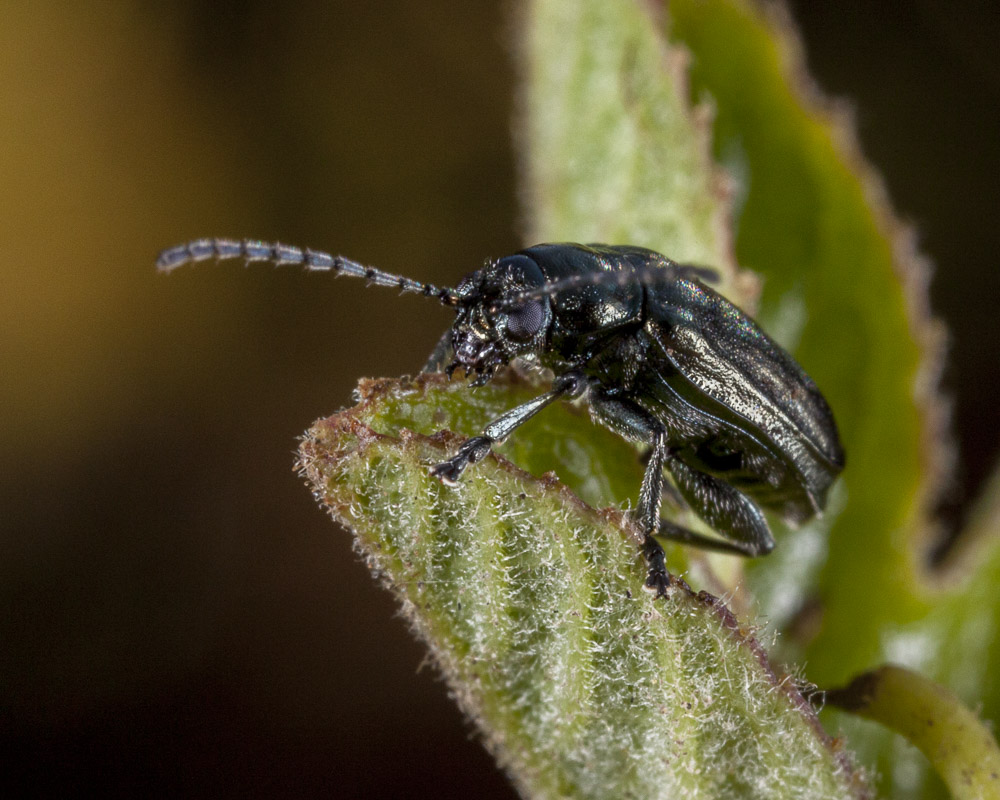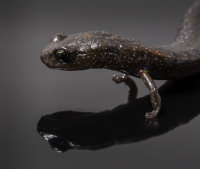
Black Beetle
I found a black bug sitting on a leaf next to my driveway, and decided to capture it and photograph it. The capture was easy, but photographing it wasn’t. I brought it inside, set up a few lights, and let it free. After two flashes, it flew away, and I was left with a couple of ugly shots. A bug wrangler might have helped, but no one was around to help.
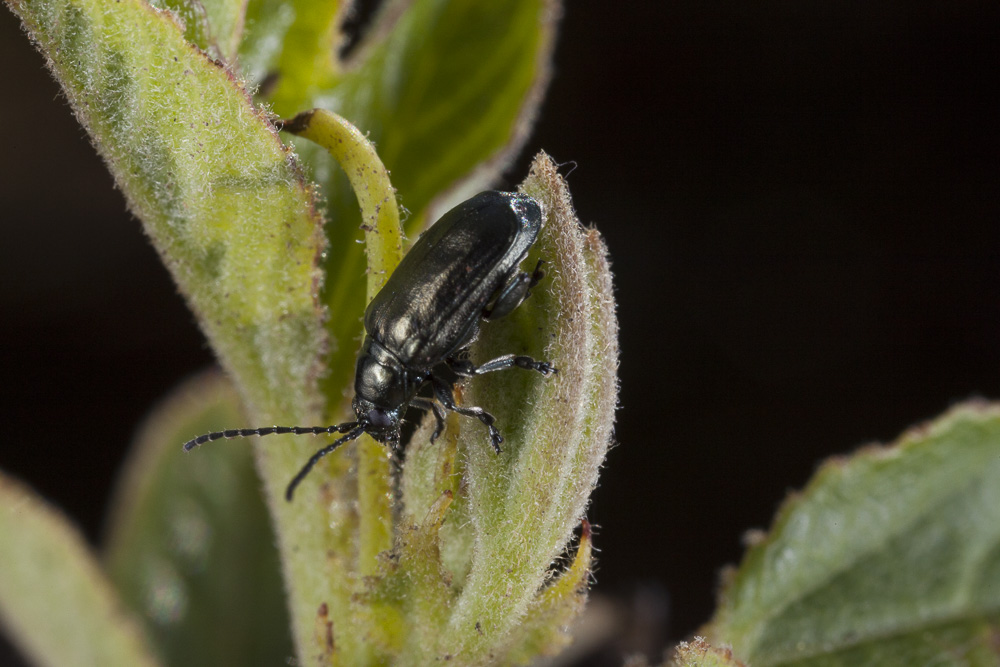
A week or so later, a similar bug appeared in about the same place. This time I was smarter. I decided to photograph the bug in place, rather than moving it. Even photographically, this was better. It was sitting on a leaf, making a nice background, and behind it was a hillside. Since I planned to use flash, the hillside would go very dark, leaving just the bug and green leaves. The insect was about 1 centimeter long, less than half the size of my camera’s sensor, so I chose the Canon MP-E 65mm f/2.8 macro lens to get enough magnification. I then attached a Canon MT-24EX macro flash, and, in an attempt to diffuse the light, taped some white envelopes over the flash heads. This turned out not to work so well. The envelopes gave decent diffusion, but they banged against the leaves. I eventually took them off. At that point, I was ready to photograph.
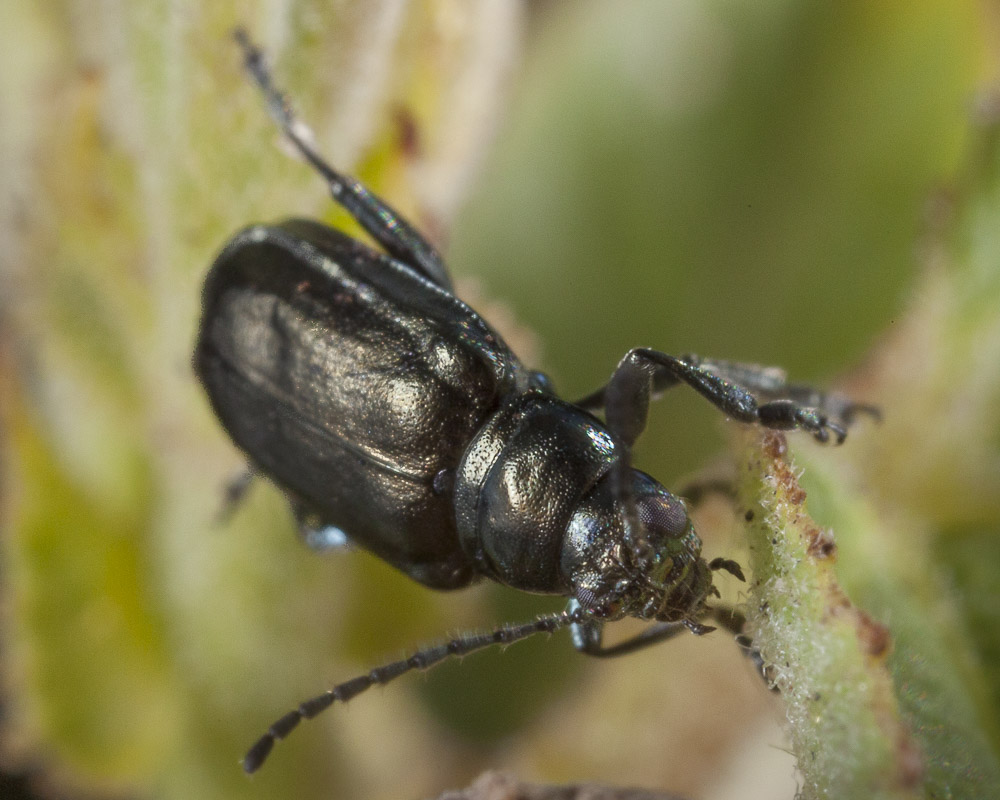
It’s possible to use a tripod with this lens and a live subject, but difficult. The only lens control is magnification. Once that's set, you move the camera/lens combination forward and backward to focus. When the subject moves, the entire camera needs to move with it to maintain focus. The leaf with the bug was very near the top rail of a fence. So I held the lens from underneath with one hand, and rested the back of the hand on the fence rail. This offered both support and freedom of movement so I could track the bug as it crawled over the leaf and still keep steady enough to avoid blur. The biggest challenge was getting the bug's eyes in focus. The depth of field extended only a couple of millimeters, so precise bug-to camera positioning was essential.